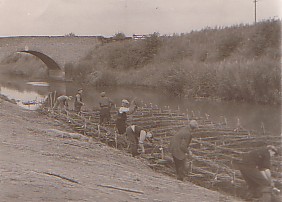
Historic Mattress Making in South Holland 1943

About Us

Our History

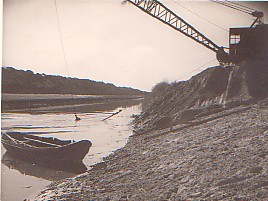
Historical dredging at Wisbech Road Bridge 1943

Quietly Reducing Flood Risk for Generations

For generations, the Water Management Alliance’s (WMA) Member Boards (IDBs) have managed water levels, reduced flood risk, supported farming, communities and habitats across the region. Our work often goes unseen, but when floods don’t happen or droughts are avoided, it’s because we’re maintaining and improving the drainage network year-round.

Climate change is bringing more frequent and extreme weather. The risk of flooding and drought is growing. Our work has never been more important.

We are committed to strengthening our systems, adapting to new challenges, and working with partners and communities. Together, we aim to build long-term resilience across our catchments.

Use the links below to learn more about each of our Member Board’s Legal Chronology and see the timeline of how each of them became part of the WMA consortium.
Our Timeline: The Story Behind the WMA

The Water Management Alliance is built on the legacy of many individual Internal Drainage Boards, each with its own history. 

Explore the evolution of each IDB below to see how they became part of the WMA consortium. 
1967

The King’s Lynn Consortium is Formed

A group of Internal Drainage Boards (IDBs) in Norfolk band together to share resources and expertise. Founding members include: 

  • West of Ouse IDB
  • Snettisham IDB
  • Gaywood IDB
  • Magdalen IDB
  • Wingland IDB
  • River Burn IDB
  • Stiffkey River IDB
  • Holme Common IDB
  • Upper Nar IDB
  • Eastern Sea Fisheries Joint Committee (left in 1972) 
1977

New Members Join

Marshland Smeeth & Fen IDB joins the consortium, expanding its footprint in West Norfolk. 

1985

Board Mergers Begin

Gaywood and Snettisham IDBs merge to continue as a single Gaywood IDB. 

1988

Expansion into Mid Norfolk

  • River Wensum IDB joins. 
1991

The Network Grows Further

  • Smallburgh IDB, Middle Bure IDB, Repps, Martham & Thurne IDB, and Happisburgh to Winterton IDB join the consortium. 
1995

Eastern Broadland Boards Join

  • Lower Bure, Halvergate Fleet & Acle Marshes IDB, Muckfleet & South Flegg IDB, Upper Bure IDB, and Upper Yare & Tas IDB join. 
  • River Burn IDB, Stiffkey River IDB, and Holme Common IDB merge to form the North Norfolk IDB. 
2004

A New Identity for Western Boards

West of Ouse IDB, Gaywood IDB, Magdalen IDB, Wingland IDB, and Marshland Smeeth & Fen IDBs merge to become the King’s Lynn IDB. 

2005

Major Restructuring in Norfolk

Boards form two new larger IDBs: 

  • Norfolk Rivers IDB – formed by Upper Nar IDB, River Wensum IDB, Upper Bure IDB, Upper Yare & Tas IDB, and gravity catchments of Smallburgh IDB and Middle Bure IDB.
  • Broads IDB – formed by Repps, Martham & Thurne IDB, Happisburgh to Winterton IDB, Lower Bure, Halvergate & Acle Marshes IDB, Muckfleet & South Flegg IDB, and pumped catchments of Smallburgh IDB and Middle Bure IDB. 
2006

Lower Yare Boards Join the Broads

Lower Yare First and Fourth IDBs merge into the Broads (2006) IDB. 

2007

The Water Management Alliance is Formed

King’s Lynn IDB, Norfolk Rivers IDB, and Broads (2006) IDB are joined by South Holland IDB to form the Water Management Alliance (WMA).

2008

East Suffolk Joins the WMA

East Suffolk IDB, later renamed East Suffolk Water Management Board (WMB), in 2023, becomes part of the WMA. 

2020

Waveney, Lower Yare & Lothingland Joins the WMA

Waveney, Lower Yare & Lothingland IDB joins the partnership. 

2024

Expanding to the South East

Pevensey & Cuckmere Water Level Management Board (WLMB) becomes a member of the WMA.