Need help finding something?

Upper Thurne Integrated Drainage Project
St Benets Pumping Station

Services
Civil Engineering

Location
St Benets
Norfolk

Partners
Bam Nuttall
Jacobs
Turner & Townsend

Start & Completion
January 2025 – Ongoing
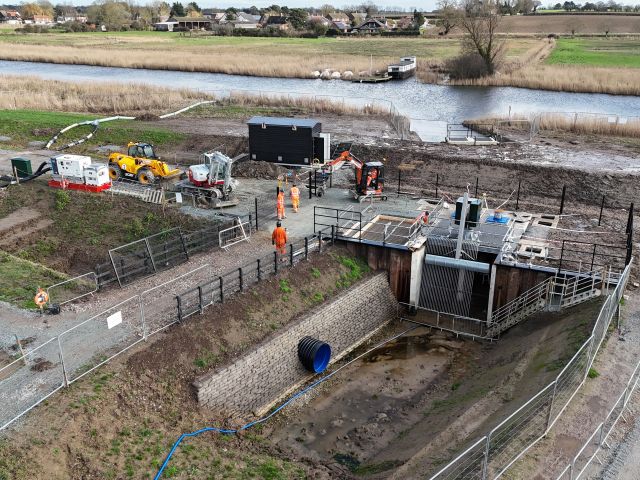
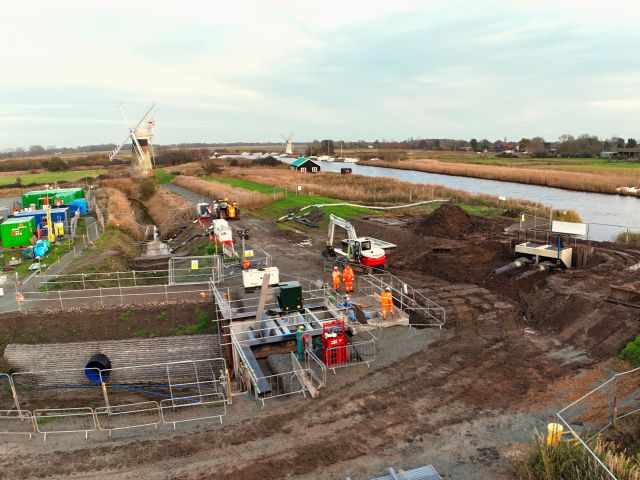
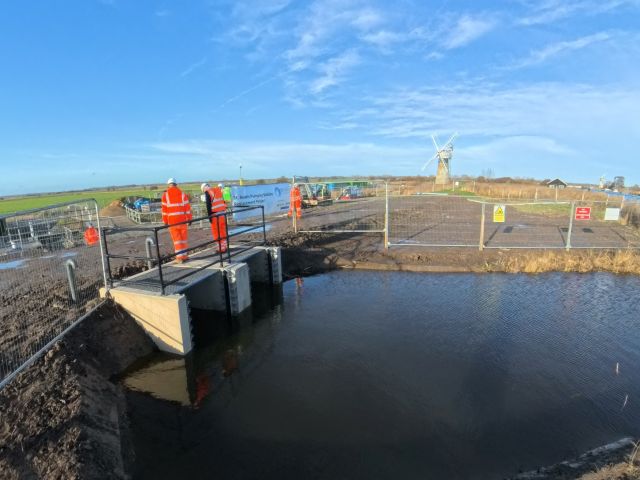
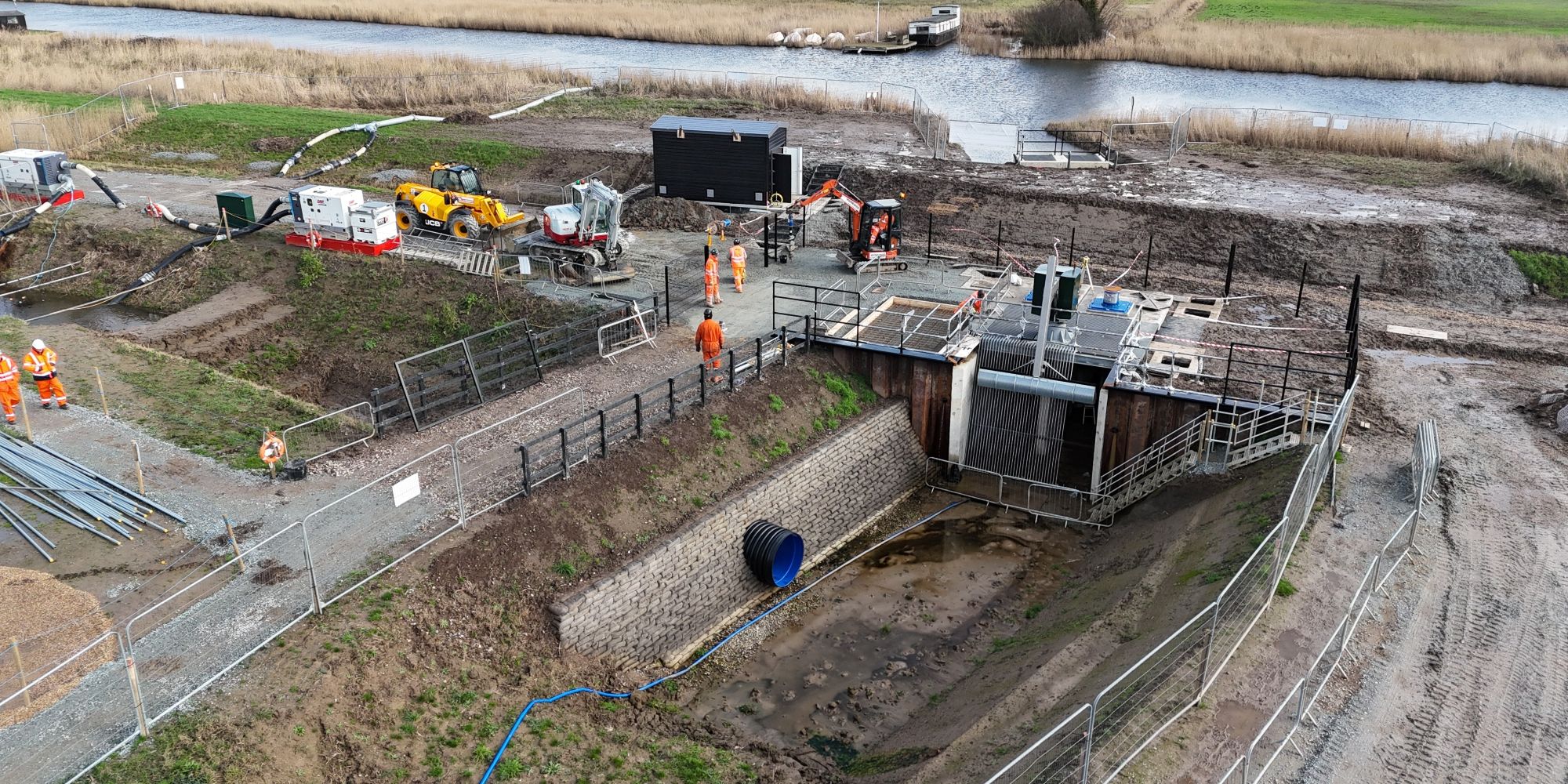
The replacement of St Benets pumping station is being delivered under Package 1 of the wider Upper Thurne Integrated Drainage Improvements Project. The replacement pumping station directly protects the 310Ha St Benets drainage district (reference CMT151P) and is located around 115m south of the original St Benets drainage mill where a pump has stood since c.1775.
Construction of the new pumping station commenced Spring 2025 and is planned for completion Summer 2026.
Construction Plans
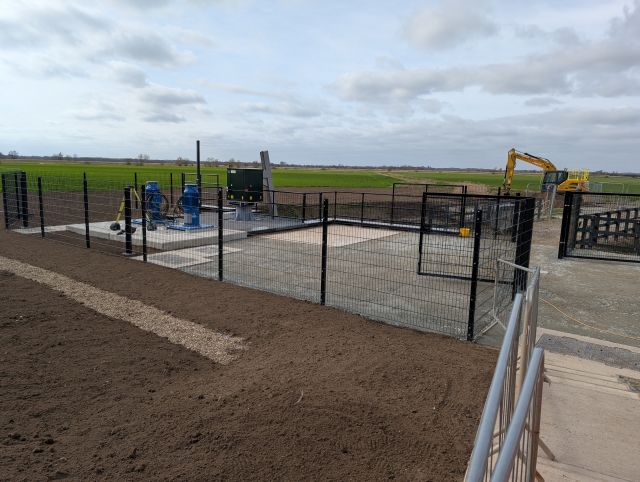
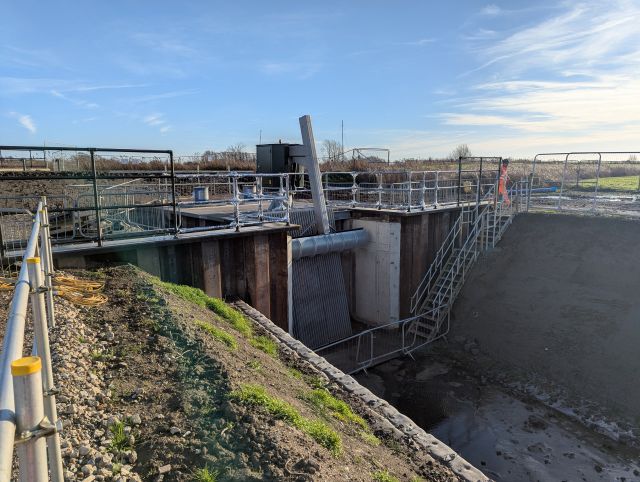
The pumping station features two Pentair VDX1-450 suspended bowl mixed flow “less harm” pumps offering significant increases in efficiency over the current submersible pumps. To deal with climate change and increased severity of rainfall events duty capacity is increased by a minimum 50% with each pump delivering up to 375 litres per second.
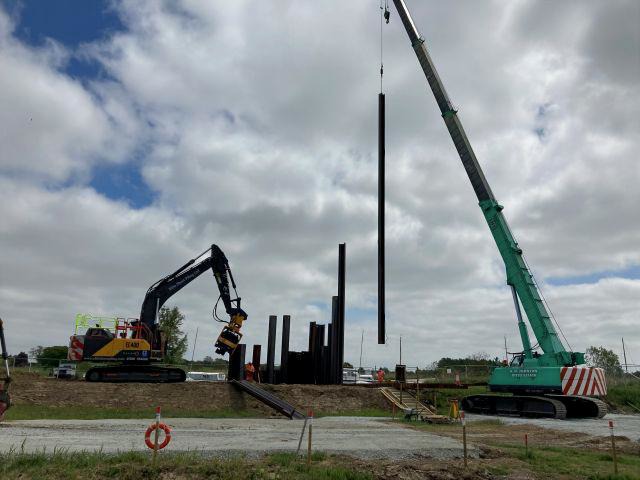
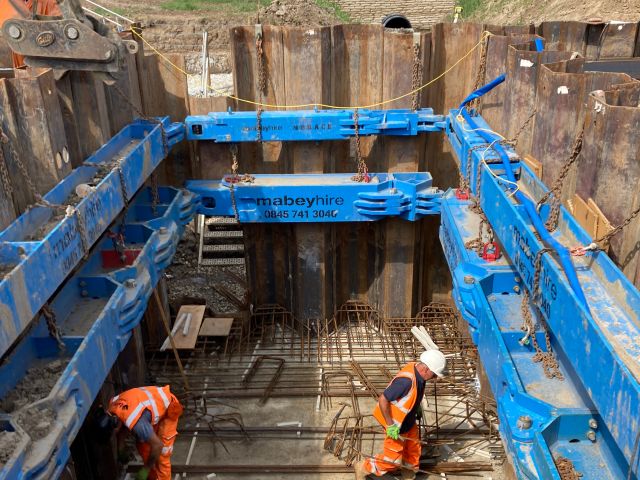
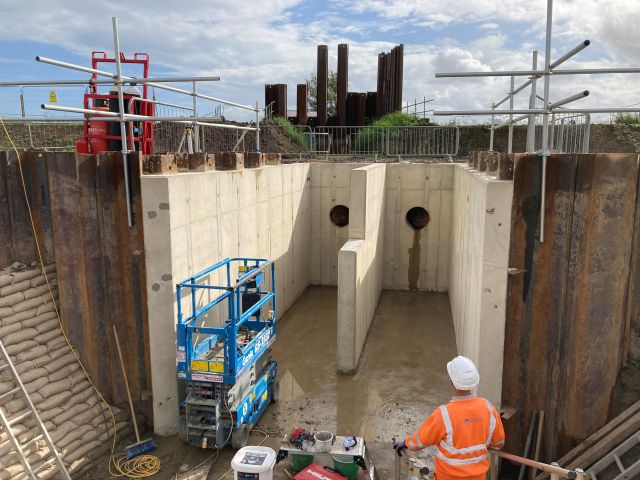
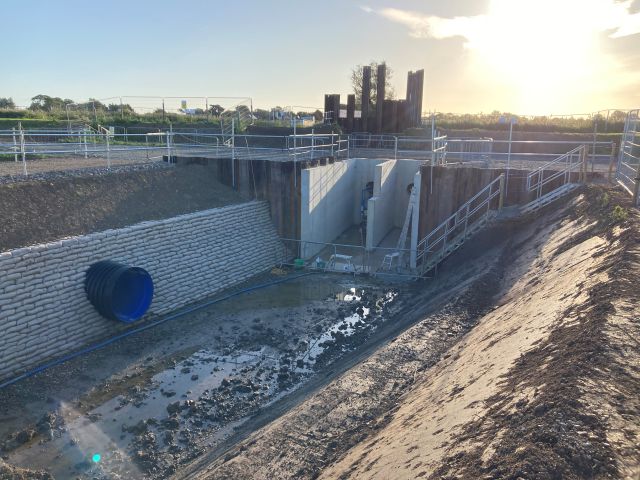
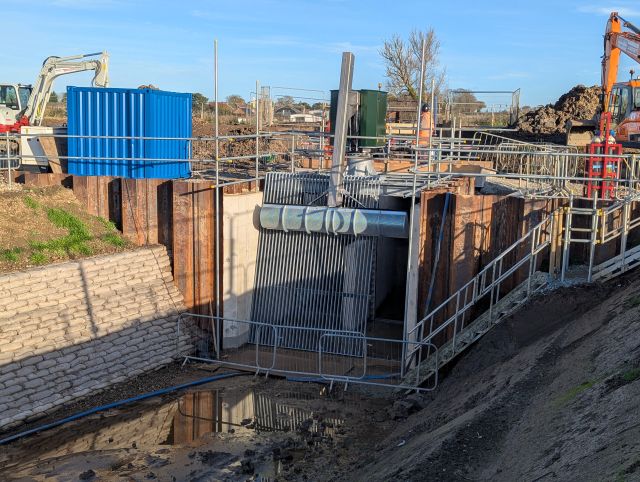
The 3.70m deep pumping station “wet well” (intake) is formed from 20.7m long steel sheet piles driven in to the underlying crag group. The sheet piles form both the temporary cofferdam and permanent wet well. The wet well sump, central dividing wall and liner is constructed from in-situ cast reinforced concrete.
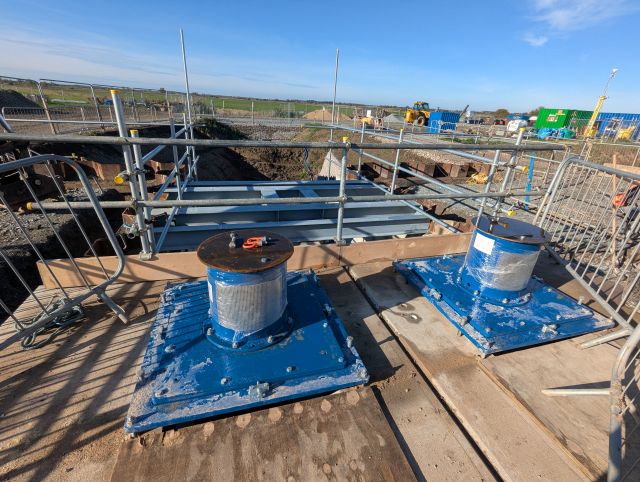
The pumps are supported on precast concrete pump support slabs which bear on the wet well concrete liner and central wall. A “deck mounted rotating arm” automatic trash system and screen protects the intake from course debris.
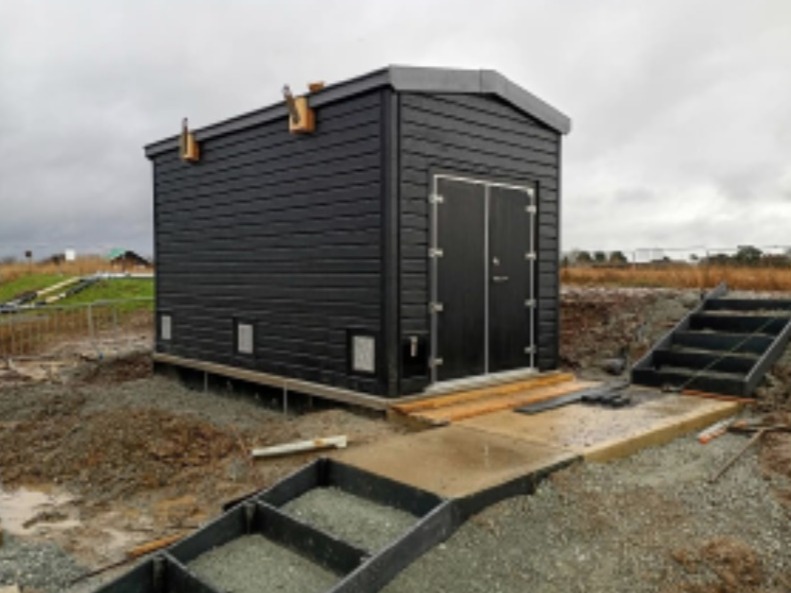
The black horizontal timber effect GRP kiosk houses Motor Control Centre, power and telemetry systems. The pumps are controlled by Variable Speed Drives allowing them to deliver a broad range of flows in response to catchment conditions. The telemetry system provides improvements in remote monitoring, control and operation of the station.
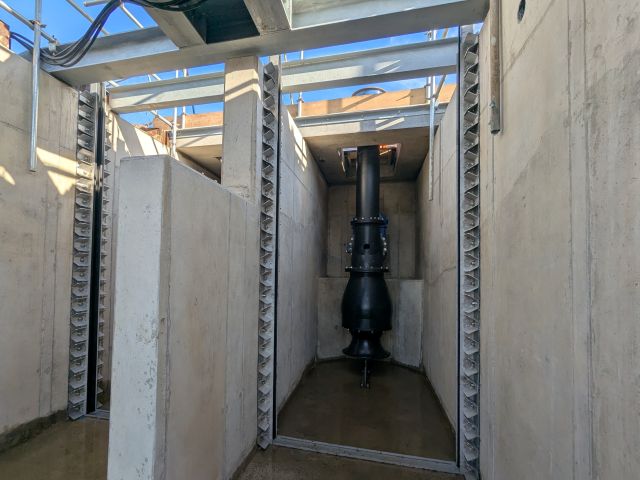
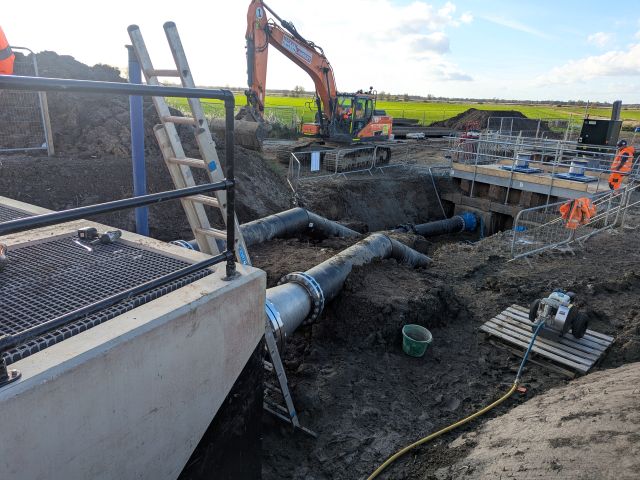
The pumping station discharges through below ground PE pipework into the River Thurne through precast concrete chambers. The outfall chambers and pipework are designed to reduce discharge velocities, ensuring no detrimental impact on river users.
The system is protected from return flow by lightweight HDPE flap valves at the outfalls and “gate valves” within the wet well.
Both the control building and outfall pre-cast units are founded on steel piles to ensure prevent settlement.
The visual impact of the station has been carefully considered given the sensitive nature of the site through the specification of material colours and plant selection whilst balancing the primary function as a pumping station.
Project Gallery