Need help finding something?
PROJECTS
Spaghetti Junction, Pevensey Levels

Services
Civil Engineering


Partners
Delivered by: CJ Thorne
Designed by: Ardent Consulting Engineers
IDB Storm Recovery & Asset Improvement Grant Scheme Funding

Start & Completion
Autumn 2025 – Spring 2026
The Spaghetti Junction Project is a vital flood risk management and asset improvement scheme located to the east of Hailsham on the Pevensey Levels. This unique and sensitive landscape is designated as a Site of Special Scientific Interest (SSSI), a Special Area of Conservation (SAC) and a Ramsar site, reflecting its international importance for wildlife, habitats and water-dependent ecosystems.
The project has been made possible through funding from the Internal Drainage Board (IDB) Storm Recovery & Asset Improvement Grant Scheme, recognising both the increasing pressures on drainage infrastructure and the growing risks associated with climate change and development.
The works focused on a critical junction where three of the Water Level Management Board’s (WLMB) main drains meet: Horse Eye Sewer, White Dyke Sewer and Rickney Sewer. This complex interaction of watercourses plays a central role in managing water levels across Units R1 to R9 of the Pevensey Levels Water Level Management Plan (2015), working in combination with the Rickney Pumping Station.
Project Overview
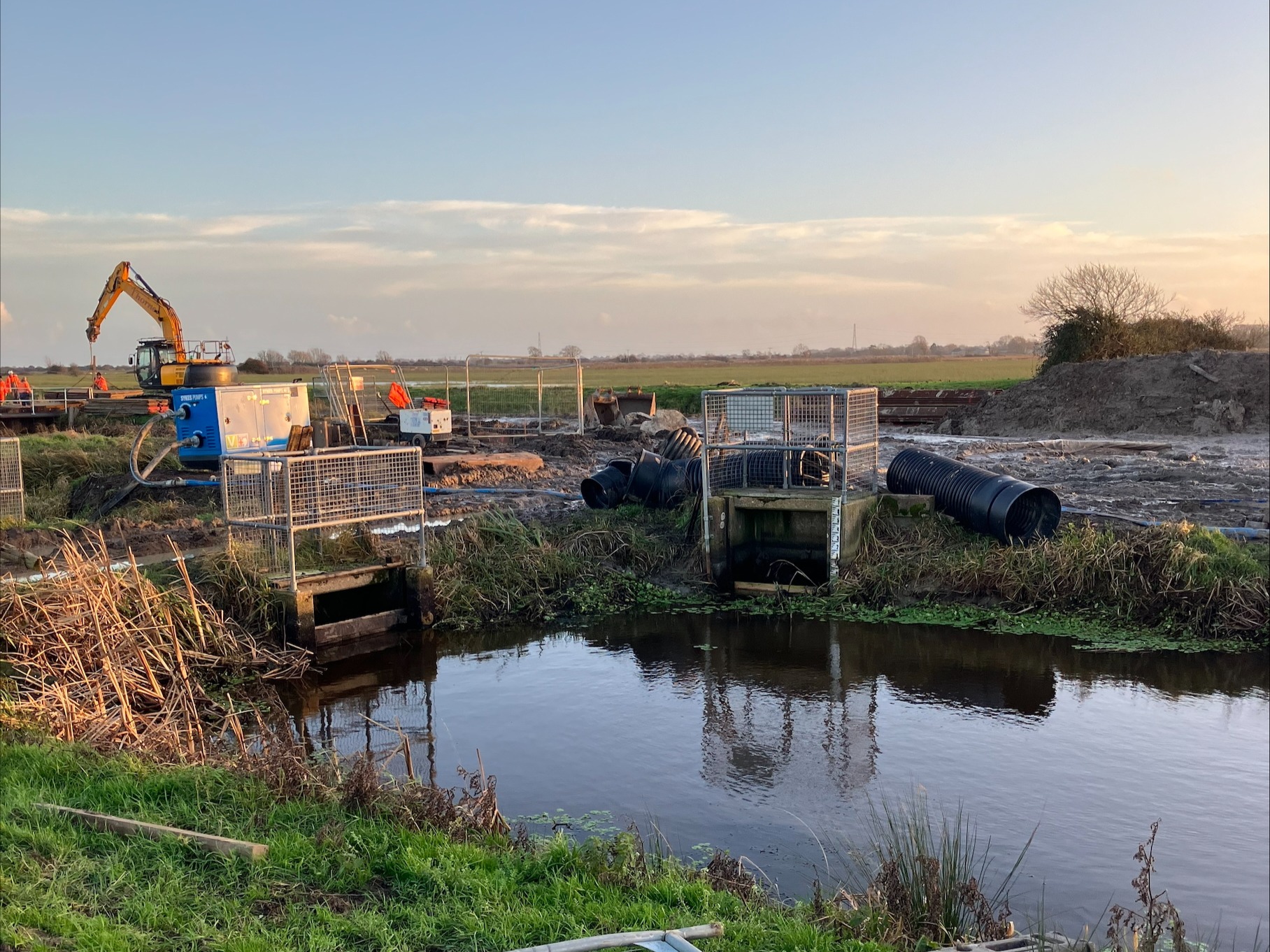
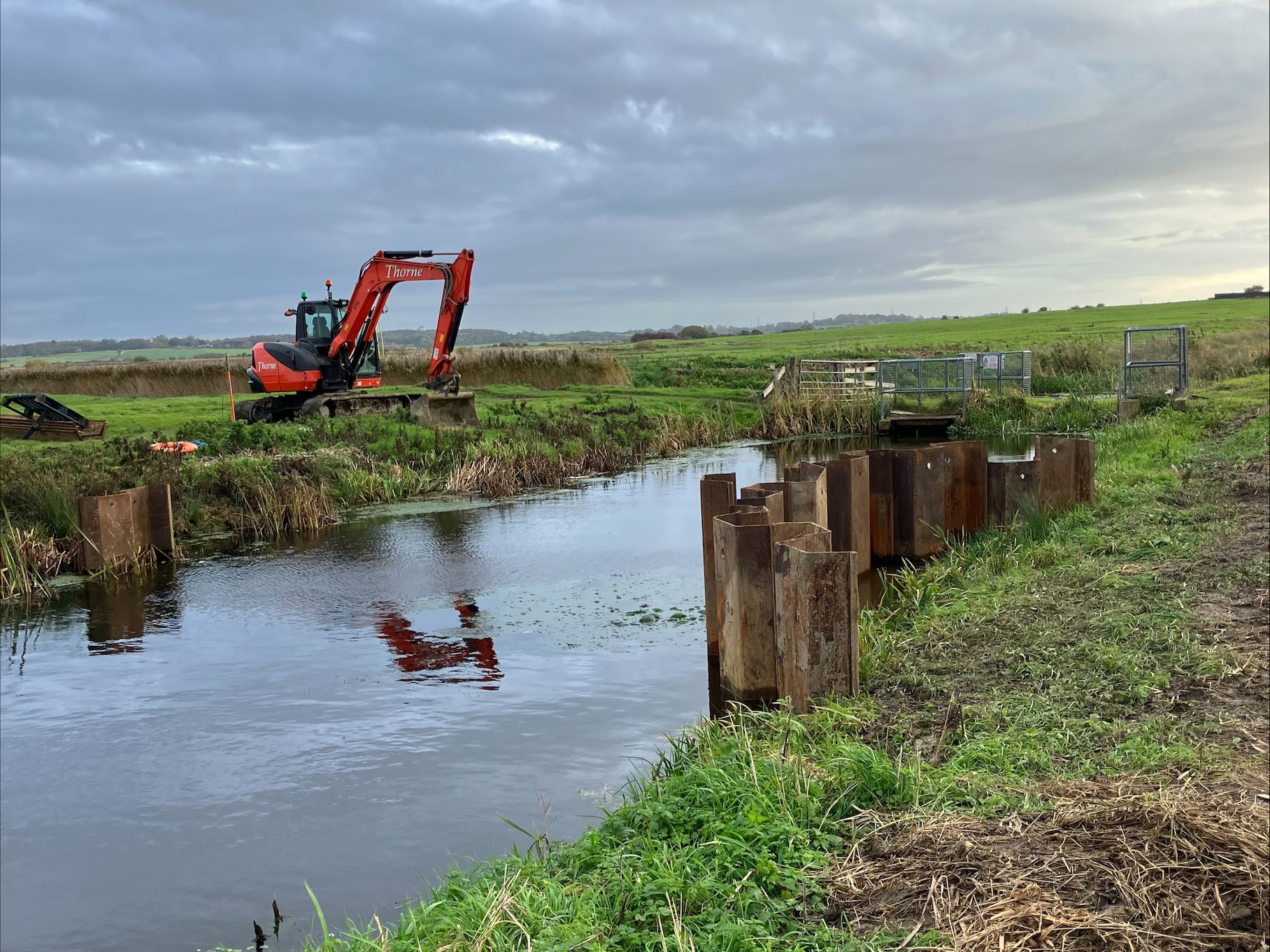
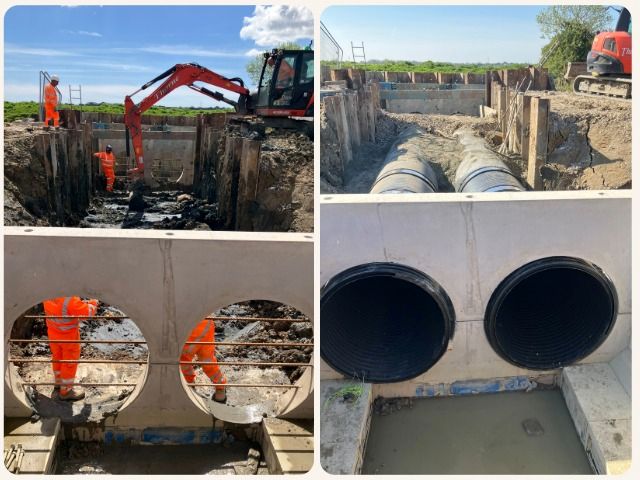
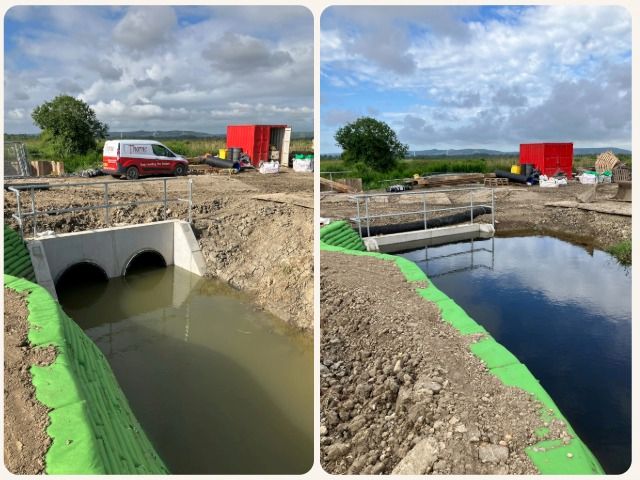
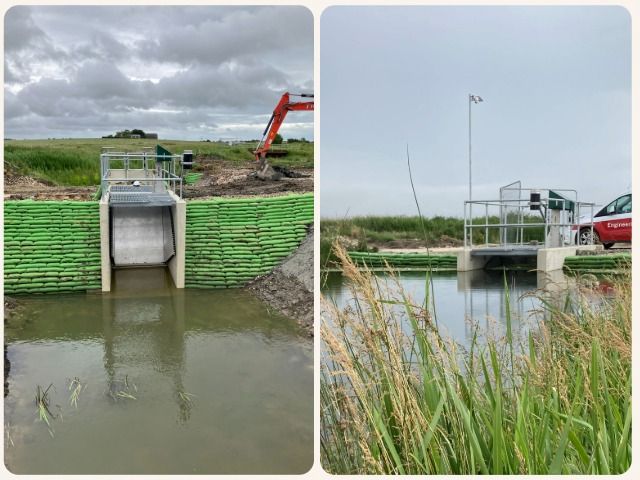
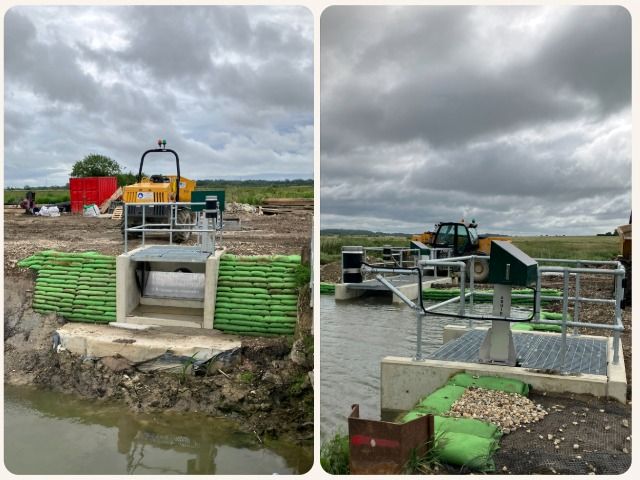
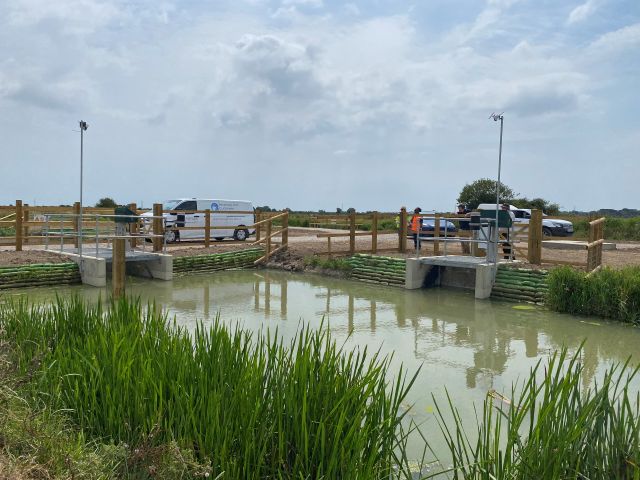
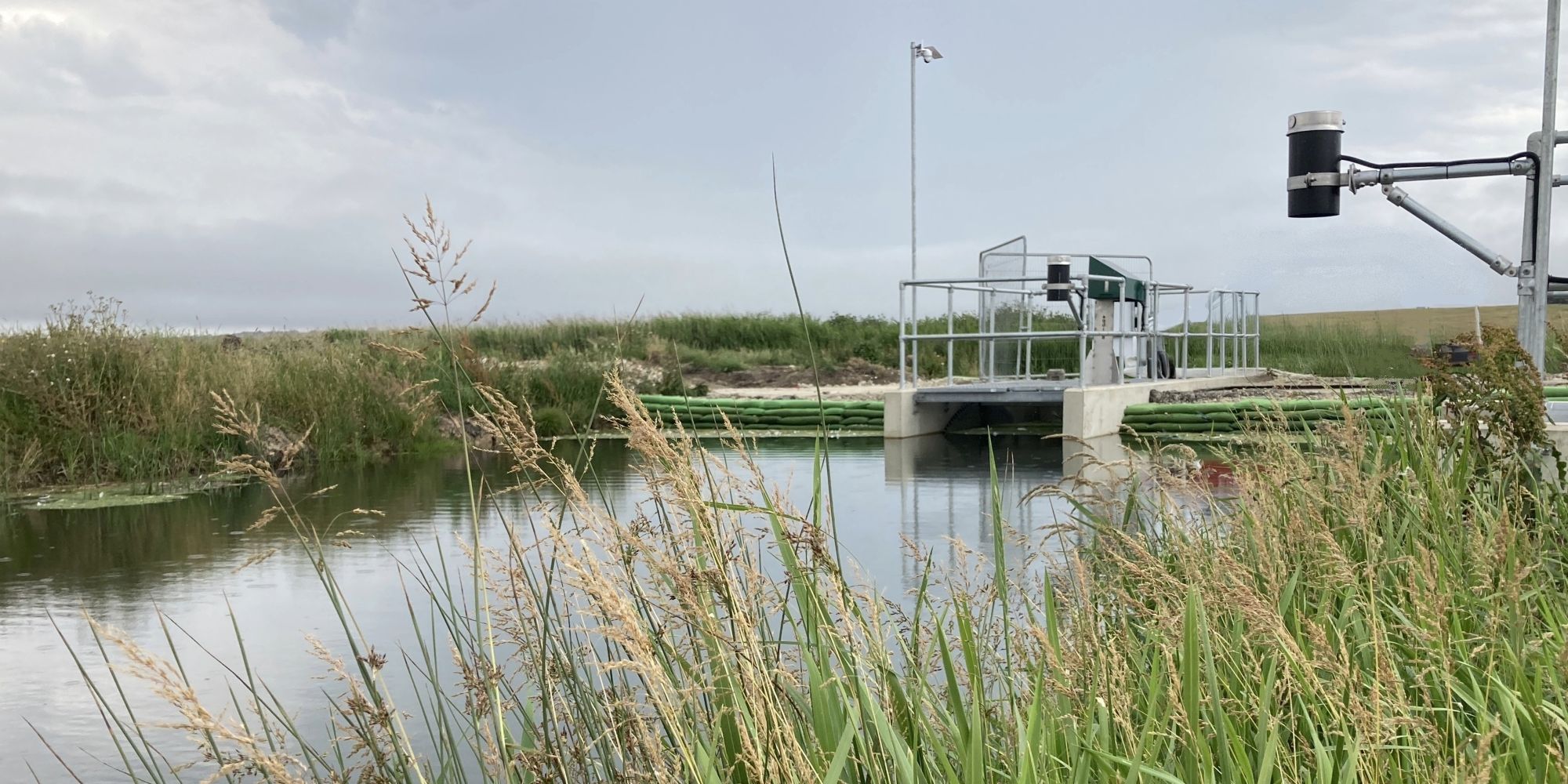
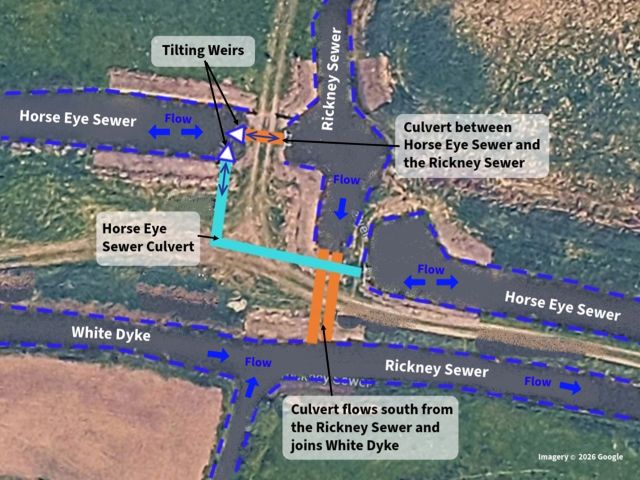
The Spaghetti Junction Project addressed a high-risk section of drainage infrastructure where ageing assets were failing. At this location the high level Horse Eye Sewer conveys water to the low level Rickney Sewer through a culvert, and also to the high level Horse Eye Sewer through another culvert with two dam board water control structures regulating the water levels. The Rickney Sewer flows under the Horse Eye Sewer in another culvert to the White Dyke Sewer, which becomes the downstream section of the Rickney Sewer at this location. The dam board water control structures, controlling water levels between the three drains leaked significantly, affecting the ability to manage water levels effectively, and were becoming increasingly dangerous for staff to operate.
Over time, these culverts have become partially collapsed, particularly the structure conveying the Horse Eye Sewer. In addition, the embankment separating the Horse Eye and Rickney Sewers has become heavily eroded, allowing water to overtop prematurely into the pumped system. If left unaddressed, there is a high risk that all three culverts could fail entirely, causing the watercourses to converge and making effective water level and flood risk management impossible.
Benefits
This junction receives water from a large area of east Hailsham, including Hailsham South Sewage Treatment Works and expanding residential areas around Station Road and Marshfoot Lane. These locations have experienced repeated flooding in the past when water levels could not be managed effectively.
By securing and upgrading this critical junction, the project has:
- Reduced flood risk to the catchment of the three drains within Hailsham Town and parts of the Pevensey Levels
- Improved resilience for existing and future development in east Hailsham
- Helped prevent surface water flooding on key transport routes such as Station Road
- Improved retention of water during summer, allowing optimal water levels for the environment
Without intervention, failure of the culverts could lead to continuous flooding, driven by constant inflows from the sewage treatment works.
Effective water level management is essential to maintaining the ecological integrity of the Pevensey Levels. The project protects:
- 773 hectares of Grade 3 agricultural land, including 677 hectares designated as SSSI, SAC and Ramsar
- Wet grassland habitats that support internationally important species
In a ‘do nothing’ scenario, there would be a serious impact on the function of surface water draingage within Hailsham town, including Hailsham South Sewage Treatment Works and widespread flooding would result in land being written off for agricultural use, with significant long-term environmental and economic impacts.
Project Gallery